Watching Without Permission: The Informed Consent Crisis Hidden Inside Modern Clinical Trials
A Signature on a Form That No Longer Describes the Experiment
For decades, the informed consent document served as the foundational contract between a clinical trial participant and the institution conducting research on their body. A patient read — or was walked through — a document describing the procedures, the risks, the data being collected, and the purposes for which it would be used. They signed. The trial proceeded.
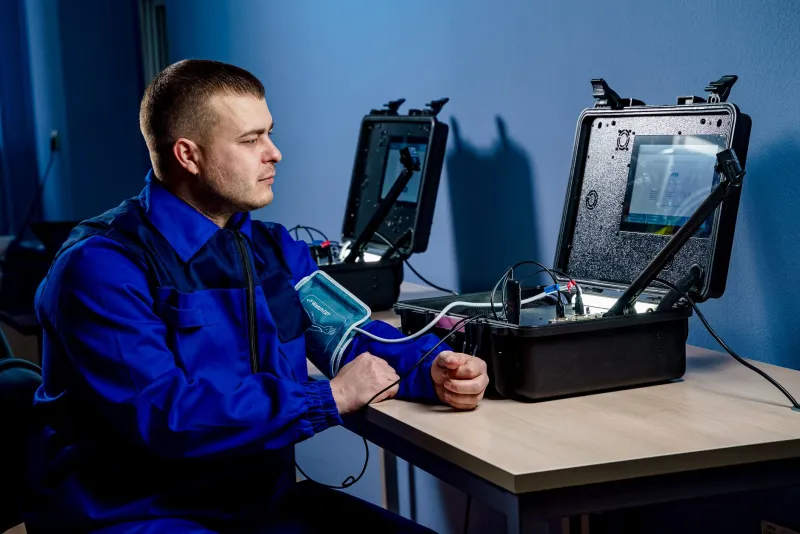
That model was built for a world in which data collection was episodic: a blood draw on Tuesday, a scan on Friday, a questionnaire at the six-week visit. It was never designed for a world in which a participant's heart rate, sleep architecture, gait patterns, blood oxygen levels, and skin temperature are transmitted continuously to a cloud server, processed by a proprietary algorithm, and potentially shared with a sponsor's commercial analytics division — all while the participant goes about their daily life, largely unaware that the observation is ongoing.
That world, however, is the one clinical research now increasingly inhabits.
The Wearable Revolution and Its Consent Blind Spot
The adoption of digital health technologies in clinical trials has accelerated sharply over the past five years. Wearable devices — smartwatches, biosensor patches, continuous glucose monitors, and implantable telemetry systems — now appear in trials across cardiovascular medicine, oncology, neurology, and rare disease research. The appeal is straightforward: continuous passive data collection reduces reliance on infrequent clinic visits, captures biological signals that episodic measurement would miss entirely, and generates datasets of a richness and resolution previously unimaginable in a clinical context.
For biotech companies developing next-generation therapies, particularly in areas such as gene therapy and genomic medicine where treatment effects may be subtle, delayed, or highly individualized, real-time biometric surveillance offers a compelling scientific advantage. A wearable can detect a cardiac arrhythmia that a monthly ECG would never capture. A continuous glucose monitor can reveal glycemic variability patterns invisible to quarterly HbA1c measurements. The science is genuinely better.
The problem is not the data. The problem is what patients were told about it — and what they were not.
What Participants Understand Versus What Is Actually Happening
Multiple studies examining participant comprehension of digital consent documents have found a consistent and troubling pattern: individuals enrolled in trials involving wearable or continuous monitoring technologies frequently cannot accurately describe what data is being collected, how long it will be retained, who has access to it, or under what circumstances it might be used beyond the immediate study purpose.
This is not primarily a failure of individual intelligence. It is a structural failure of the consent process itself. Standard consent documents were developed under regulatory frameworks — principally the Common Rule and FDA regulations at 21 CFR Parts 50 and 56 — that predate the era of algorithmic health surveillance. Those frameworks require disclosure of risks and procedures, but they were not written with the assumption that "procedure" might include continuous passive monitoring of intimate biological signals across every hour of a participant's day, including hours spent at home, at work, or in private spaces.
The gap between what a consent document technically discloses and what a participant can meaningfully comprehend is, in many current trials, substantial. Phrases such as "electronic health data may be collected through remote monitoring devices" do not communicate to a layperson that their sleep patterns, physical activity, and cardiovascular signals are being streamed in real time to a server infrastructure they have no visibility into.
The Regulatory Lag
The Food and Drug Administration has issued guidance documents acknowledging the expanded role of digital health technologies in clinical trials, and the agency has taken steps to address decentralized trial designs more broadly. However, critics within the bioethics and health law communities argue that these efforts have not produced the substantive revision of consent requirements that the current technological landscape demands.
The challenge is partly institutional. Updating the Common Rule requires coordination across multiple federal agencies and is a slow-moving process under any circumstances. The FDA's guidance authority allows for faster movement, but guidance is not regulation — it does not carry binding legal force, and its uptake across the industry is uneven.
Meanwhile, the pace of technological adoption in trials continues to accelerate. Sponsors are deploying novel monitoring modalities — including passive smartphone sensing, voice biomarker analysis, and ambient home monitoring devices — without any clear regulatory consensus on what consent for these modalities must include or how comprehension should be verified.
Some institutional review boards have begun developing their own supplementary standards for digital data consent, but this produces fragmentation rather than coherence. A participant enrolled in a trial at one academic medical center may receive substantially more robust consent protections than a participant in the same sponsor's trial at a community site operating under a different IRB.
Data Flows Beyond the Trial
Perhaps the most underappreciated dimension of the problem involves what happens to continuously collected trial data after the study concludes — or after a participant withdraws.
In traditional clinical research, withdrawal from a trial meant, at minimum, that no further biological specimens would be taken. The boundaries of data collection were defined by discrete acts. In a continuous monitoring paradigm, the data collected before withdrawal may remain in a sponsor's possession indefinitely, subject to contractual terms that few participants read carefully and fewer still fully understand.
The commercial implications are significant. Health data generated in clinical trials has potential value far beyond the immediate study — for algorithm training, for biomarker discovery, for secondary research purposes that may not have existed when the original consent was obtained. Whether existing consent frameworks adequately authorize these downstream uses is a question that has not been definitively resolved, and the answer may vary considerably depending on the specific language of a given consent document and the jurisdiction in which the trial is conducted.
The emergence of large-scale biobank partnerships between academic medical centers and commercial entities has added further complexity. Data generated in a federally funded trial, collected via a commercially manufactured wearable, processed by a third-party analytics firm under contract to the sponsor, and subsequently shared with a biobank consortium may pass through four or five distinct legal and institutional environments before it comes to rest — each with different privacy standards and different interpretations of what the original consent authorized.
Toward a Consent Framework Built for Continuous Surveillance
Reforming informed consent for the era of real-time biological monitoring will require more than updated boilerplate language. Bioethicists and patient advocates have increasingly called for dynamic consent models — frameworks that allow participants to make ongoing, granular choices about data sharing rather than signing a single document at enrollment and having no further meaningful agency over what follows.
Such models are technically feasible. Several academic and nonprofit research initiatives have piloted digital consent platforms that allow participants to specify their preferences at the level of individual data types, to update those preferences over time, and to receive plain-language notifications when their data is accessed for new purposes. The barriers to broader adoption are not primarily technological — they are institutional and economic.
Sponsors have limited financial incentive to invest in consent infrastructure that restricts their data access. Regulators have been slow to mandate it. And the patients bearing the greatest exposure — those enrolled in trials for serious or life-threatening conditions, who may feel they have no meaningful choice but to participate — are in the weakest position to advocate for themselves.
The scientific promise of continuous biological monitoring in clinical research is real and substantial. But a trial architecture that observes everything while explaining very little is not simply an ethical inconvenience. It is a structural vulnerability — one that erodes the trust on which the entire enterprise of human subjects research depends, and one that the life sciences industry has not yet found the will to fully address.