How the Pentagon Wrote Your Pharmacy Receipt

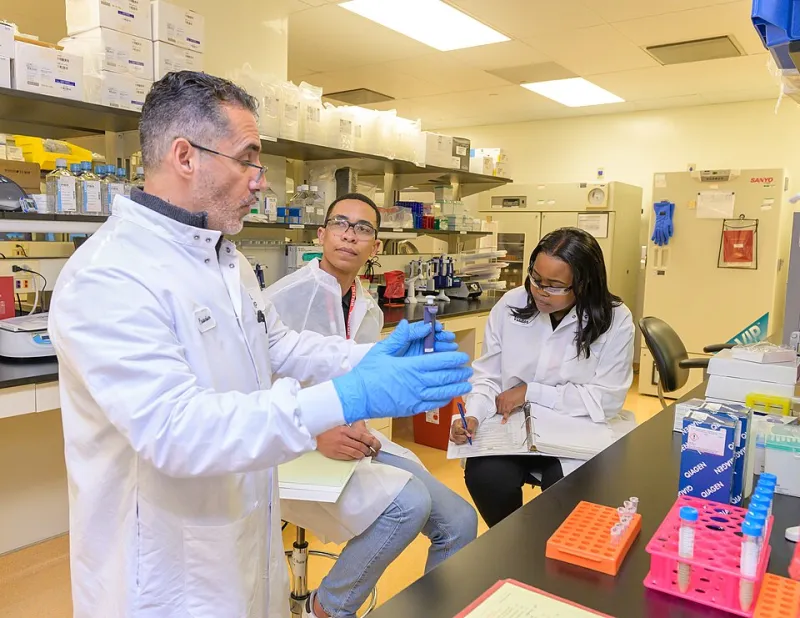
Photo: Eric Jones , CC BY-SA 2.0, via Wikimedia Commons
American medicine carries the fingerprints of the Pentagon everywhere, though you would never know it from a trip to the pharmacy. Some of the most routinely prescribed and routinely administered treatments in civilian healthcare began as weapons programs, battlefield improvisations, or defense-funded crash projects. Six examples illustrate just how deep the military's imprint runs.
1. Nitrogen Mustard and the Birth of Chemotherapy
Chemical warfare agents were stockpiled by the ton during the Second World War, and when an American supply ship carrying mustard gas was destroyed in an Italian harbor in 1943, physicians treating exposed sailors made a fateful observation: the victims' white blood cell counts had collapsed. If the agent destroyed normal white cells, researchers at Yale reasoned, perhaps it could destroy cancerous ones. Nitrogen mustard became the first chemotherapy agent used to treat lymphoma, and the cytotoxic chemotherapy era — still a backbone of oncology — descends directly from a weapons program.
2. The Flu Vaccine's Military Origins
Influenza vaccination in the United States began not as a public health program but as a military necessity. Army bases, where recruits from across the country were packed into barracks, suffered devastating flu outbreaks during the Second World War. The Armed Forces Epidemiological Board drove the first large-scale influenza vaccine trials, and military surveillance networks — descendants of those early programs — still inform today's seasonal vaccine strain selection.
3. Tourniquets, Hemostatic Gauze, and Modern Trauma Care
For decades, military medicine taught that battlefield tourniquets were dangerous and should be avoided. Data from Iraq and Afghanistan overturned that doctrine: properly applied tourniquets, combined with hemostatic gauze and rapid evacuation protocols, dramatically reduced preventable deaths from hemorrhage. Those lessons migrated home through civilian trauma systems, and the "golden hour" emergency medicine now practiced in American trauma centers is substantially a product of wartime casualty analysis.
4. Wartime Penicillin Production
Penicillin was discovered in London, but it was American wartime mobilization that turned it into a medicine. The War Production Board coordinated a crash industrial program that recruited deep-tank fermentation expertise — much of it from corn-processing plants in the Midwest — scaling output from enough for a handful of patients to enough for every Allied casualty. The manufacturing science that made antibiotics a mass commodity was built to military specifications.
5. The Whole-Blood and Plasma Logistics Network
Wartime demands for blood products forced the creation of large-scale collection, fractionation, and cold-chain logistics — the foundations of the modern blood banking system. Dried plasma packets carried by soldiers in the Second World War evolved into the plasma protein products, immunoglobulins, and transfusion infrastructure that hospitals depend on today.
6. From DARPA to mRNA's Rapid Ascent
The Defense Advanced Research Projects Agency spent years funding rapid-response vaccine platform technologies, including early investments relevant to nucleic acid approaches, precisely because a pandemic or engineered outbreak demanded vaccines deployable in weeks rather than years. When COVID-19 arrived, that pre-existing defense investment in platform flexibility helped compress a development timeline that would once have taken a decade into a matter of months.
The Pattern Behind the List
The common thread is urgency plus funding plus tolerance for risk. Military programs could pour resources into problems without waiting for market signals, and battlefield necessity created ethical and practical justifications for moving fast. Civilian healthcare inherited the results — often without ever learning where they came from.
It is worth remembering, the next time a prescription is filled or an IV line is started, how much of the modern pharmacopoeia was drafted under a war department's budget. The peacetime lesson is uncomfortable but useful: when the United States decides a medical problem is a national priority, it has repeatedly demonstrated the capacity to solve it. The question is which problems get that designation — and who is still waiting for the answer.