The Self-Driving Laboratory Has Left the Garage

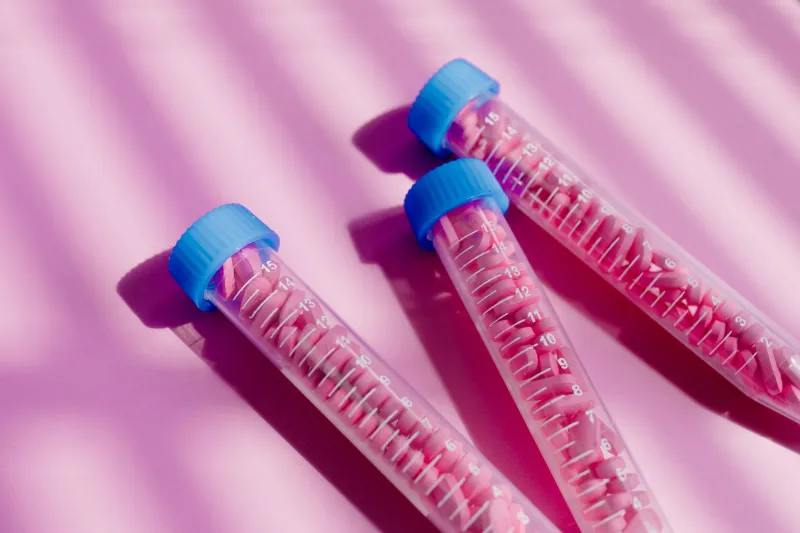
Photo: Нечаева Лилия Александровна, CC BY-SA 4.0, via Wikimedia Commons
At a handful of laboratories in the United States and abroad, experiments are being proposed, executed, and analyzed without anyone touching a pipette. A machine-learning model generates a hypothesis; a robotic platform synthesizes the compound or runs the assay; the results feed back into the model overnight; and by morning, the system has completed an optimization loop that would have taken a graduate student a semester. These are the self-driving laboratories — and they are moving from demonstration projects to production infrastructure faster than most of the life sciences establishment has noticed.
From Assistants to Authors
Lab automation is not new. Liquid handlers and plate readers have been standard equipment for decades. What has changed is the intelligence layer on top of them. Bayesian optimization and active learning now allow systems to decide which experiment to run next, rather than merely executing a list. The result is a qualitative shift: automation that once amplified human throughput is beginning to replace human decision-making at the experimental design stage.
Academic proof points are accumulating quickly. The University of Toronto's robotic lab under Alán Aspuru-Guzik has run autonomous materials discovery campaigns. At North Carolina State University, Milad Abolhasani's group has used self-driving platforms to optimize perovskite synthesis at a pace no manual workflow could match. In the commercial sphere, Emerald Cloud Lab and Strateos have built remote-controlled laboratories where scientists design experiments in software and receive data without ever entering the building, while companies like Culture Biosciences run bioreactors in the cloud for bioprocess development.
For drug discovery specifically, the implications are direct. Closed-loop platforms that combine automated synthesis with automated bioassay feedback can compress design-make-test-analyze cycles from weeks to days — attacking the single slowest step in the discovery pipeline.
The Skills Crisis Nobody Budgeted For
The uncomfortable corollary is a workforce problem. The traditional training path in American biomedical science — PhD, postdoc, years at the bench — produces expertise in manual technique that automation is steadily devaluing. Meanwhile, the skills the self-driving lab demands are scarce in biology departments: software engineering, statistics, control systems, data infrastructure.
The gap is already visible in hiring. Biotech job postings increasingly ask for Python and workflow automation alongside cell culture. Universities are slow to respond; a curriculum built around hands-on technique is expensive to rebuild around computational fluency. Without deliberate investment, the field risks producing scientists who can operate neither the robots nor the models — and concentrating laboratory literacy in a small, highly paid technical class.
Can Intuition Survive?
The deepest question is cultural. A generation of biologists was trained to trust the anomalous result noticed at 11 p.m. — the contaminated plate that revealed a new mechanism, the off-target signal that became a drug. Skeptics of full autonomy argue that algorithms optimize toward what they are told to measure, and that the most important discoveries in biology came from pursuing what the hypothesis said to ignore.
The more likely outcome is a division of labor rather than a replacement. Machines excel at exploring vast parameter spaces exhaustively; humans remain better at recognizing that the space itself is the wrong one. The scientists who thrive in the coming decades will not be those who defend the bench or surrender to it, but those who learn to interrogate an autonomous system — to ask it better questions.
The self-driving laboratory is not coming. It is here, running experiments right now while its human collaborators sleep. The choice before the life sciences is not whether to adopt it, but whether to shape a workforce and a culture capable of keeping up with it.