The Unfinished Business of CRISPR: Gene Editing's Promise Meets Its Most Stubborn Adversary — Biology Itself
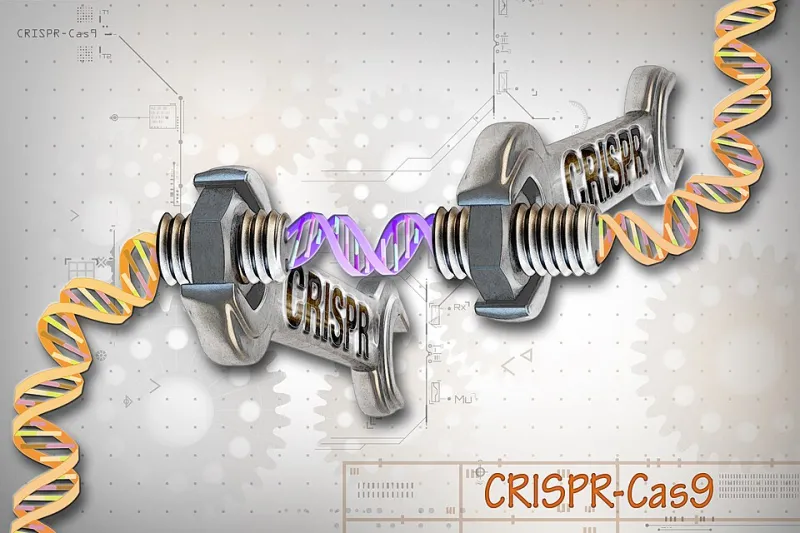
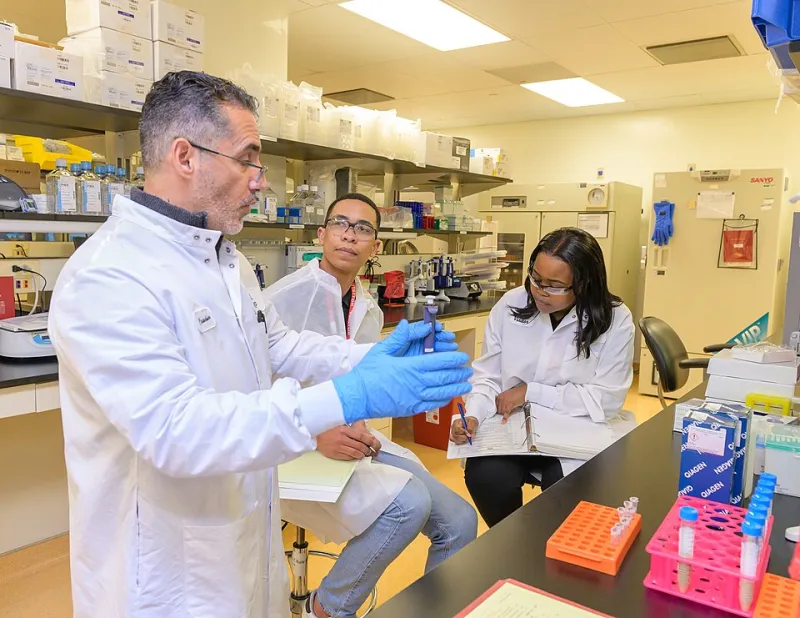
Photo: Ernesto del Aguila III, NHGRI, Public domain, via Wikimedia Commons
The approval of Casgevy in late 2023 — the first CRISPR-based therapy to receive FDA authorization — was a legitimate milestone in the history of medicine. For patients with sickle cell disease and transfusion-dependent beta-thalassemia, a technology once confined to academic publications had become a clinical reality. The celebration was warranted.
And yet, within the laboratories where the next generation of CRISPR therapeutics is being developed, the mood is more complicated than triumphant. Researchers who have spent years working through the unglamorous mechanics of gene-editing biology will tell you, candidly, that the field's most consequential problems are not solved. They are managed, partially understood, and in some cases, not fully characterized. That distinction matters enormously when the target is a human patient.
What "Off-Target" Actually Means — and Why It Keeps Scientists Up at Night
The foundational appeal of CRISPR-Cas9 is its programmability. A short guide RNA directs the Cas9 endonuclease to a specific genomic sequence, where it introduces a double-strand break. In principle, this is surgical. In practice, biology is not an operating theater.
Guide RNAs are not perfectly selective. They can tolerate mismatches — small sequence discrepancies between the guide and the target — and still direct Cas9 to cut. The result is editing at unintended genomic locations: off-target effects. Depending on where these cuts occur, the consequences range from biologically inconsequential to deeply problematic. A double-strand break near a tumor suppressor gene or within a regulatory region controlling cell proliferation introduces a risk profile that no clinician can casually dismiss.
Detecting off-target edits has itself been a scientific challenge. Early assays lacked the sensitivity to identify low-frequency events across the billions of cells in a treated patient. More sophisticated techniques — including GUIDE-seq, CIRCLE-seq, and whole-genome sequencing at depth — have improved detection, but they have also revealed that off-target activity is more common in complex genomic contexts than initial studies suggested. This is not a failure of the technology's inventors. It is a reflection of how difficult it is to predict the behavior of molecular machinery operating inside a genome containing three billion base pairs.
Mosaic Mutations: The Problem That Hides in Plain Sight
Distinct from off-target effects, mosaic mutations represent a subtler but equally important concern. When CRISPR edits a cell, it does not always produce the same outcome in every cell within a treated population. Some cells receive the intended edit. Others experience incomplete editing, alternative repair outcomes through competing DNA repair pathways, or unintended insertions and deletions at the cut site. The resulting tissue contains a mosaic of genetically distinct cell populations — some edited as intended, some not, and some edited incorrectly.
For ex vivo therapies — those in which cells are removed from the patient, edited in a laboratory setting, and reinfused — mosaicism can be partially screened before administration. Edited cell populations can be characterized, and those with undesirable outcomes can, in theory, be excluded. This is one reason ex vivo approaches have advanced more readily through clinical development than in vivo strategies.
In vivo CRISPR delivery — where the editing machinery is introduced directly into the body — offers no such quality control checkpoint. The editing occurs across a heterogeneous cellular environment, under conditions that are far harder to characterize or standardize. The implications for therapeutic consistency and long-term safety monitoring are significant and, to date, incompletely resolved.
The Immune System's Unwelcome Opinion
Beyond the genome itself, CRISPR therapies must contend with the immune system — an adversary with a long memory and a low tolerance for foreign proteins. The Cas9 protein most commonly used in clinical applications is derived from Streptococcus pyogenes, a bacterium that has infected the majority of the human population at some point. Consequently, many people carry pre-existing antibodies against Cas9, as well as T cells primed to mount a cellular immune response against it.
The clinical implications are not trivial. Pre-existing immunity could neutralize the editing machinery before it reaches its intended target, reducing therapeutic efficacy. More concerning, it could trigger an inflammatory response that causes off-target tissue damage or systemic adverse events. A 2018 study published in Nature Medicine documented pre-existing humoral and cellular immunity to both S. pyogenes and S. aureus Cas9 in a substantial proportion of healthy human donors — a finding that generated considerable discussion among clinical developers at the time and has not been fully resolved since.
Responses have included the development of smaller Cas variants — CasX, Cas12a — derived from organisms less commonly encountered by the human immune system, as well as stealth delivery strategies designed to minimize immune recognition. Base editing and prime editing, which modify the genome without introducing double-strand breaks, reduce some immunogenicity concerns while introducing their own distinct safety questions. None of these approaches eliminates the immune challenge entirely.
Regulatory Caution as a Scientific Signal
The FDA's approach to CRISPR therapeutics reflects the field's genuine uncertainty. The agency has moved deliberately, requiring extensive preclinical safety packages, long-term follow-up commitments, and in some cases, pausing or placing clinical holds on programs where safety signals warranted closer examination. In 2021, the FDA placed a clinical hold on a CRISPR program developed by Editas Medicine targeting Leber congenital amaurosis, citing manufacturing and preclinical data questions — a reminder that regulatory scrutiny is not bureaucratic friction but a substantive response to unresolved scientific questions.
This caution is appropriate. Gene editing is, by definition, a permanent intervention. Unlike a drug that clears the body after discontinuation, a genomic edit made in a patient's cells persists — potentially for the lifetime of those cells and, in germline contexts, beyond. The regulatory framework must account for a risk profile that extends across decades, not clinical trial observation windows.
The Unglamorous Work That Will Actually Solve This
The scientists working to make CRISPR safe are not the ones generating headlines. They are running assay after assay to characterize off-target landscapes in primary human cells rather than convenient cell lines. They are developing better delivery vehicles — lipid nanoparticles, adeno-associated viral vectors, and non-viral alternatives — that improve tissue specificity and reduce immune exposure. They are engineering Cas variants with tighter fidelity through directed evolution and rational protein design. They are building long-term animal models that can approximate the decadal safety questions that human clinical trials cannot yet answer.
This work is slow, expensive, and rarely celebrated. It is also indispensable.
An Honest Assessment of Where the Field Stands
CRISPR will almost certainly become a cornerstone of twenty-first century medicine. The therapeutic logic is sound, the early clinical results are genuinely encouraging for specific indications, and the pace of platform improvement is real. Casgevy's approval demonstrates that the regulatory pathway exists and that patients can benefit now.
But the field's credibility — and ultimately its clinical reach — depends on honest engagement with the problems that remain. Off-target effects are not a public relations challenge to be minimized. Mosaic mutations are not a footnote. Immune responses to editing machinery are not a solved problem. They are active areas of scientific inquiry that will require sustained investment, rigorous methodology, and a willingness to report negative findings as transparently as positive ones.
The scramble to advance CRISPR therapeutics is legitimate and necessary. So is the discipline to advance them safely. At Scramble Life Sciences, we believe those two imperatives are not in tension — they are, in fact, the same imperative.