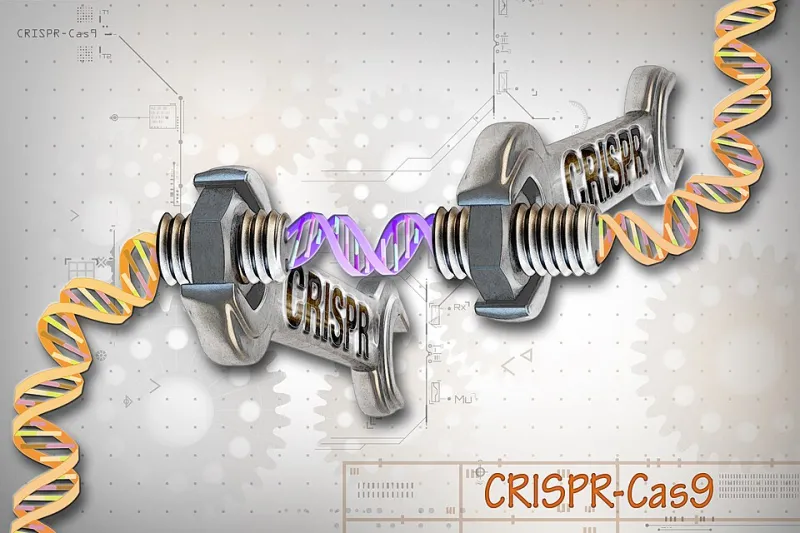
Beyond the Booster: How Upstart Biotechs Are Engineering the Next Era of mRNA Medicine
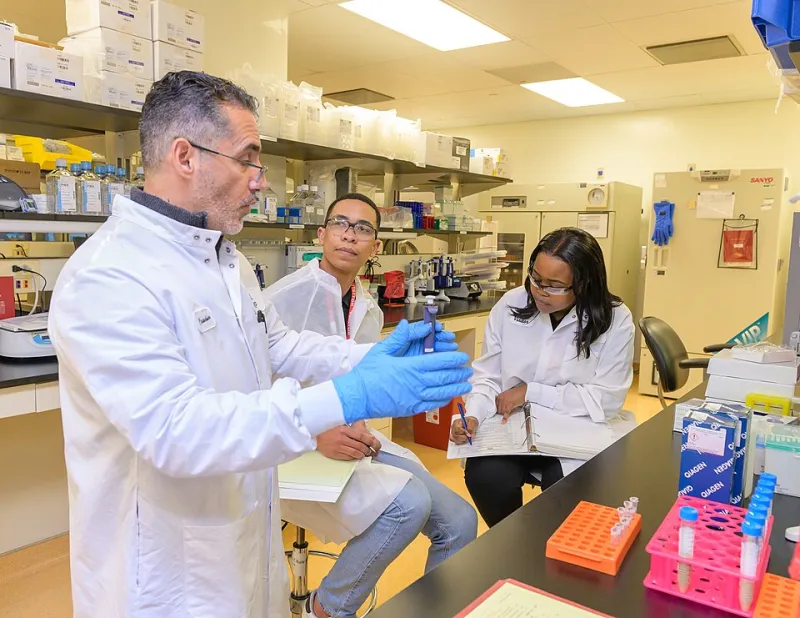
Photo: NIAID, CC BY 2.0, via Wikimedia Commons
When Moderna and Pfizer-BioNTech delivered their COVID-19 vaccines in late 2020, the scientific community celebrated what felt like the arrival of a transformative platform. Billions of doses later, however, the more significant story may be what comes next. Across research institutions, venture-backed startups, and the R&D divisions of established pharmaceutical companies, a high-intensity effort is underway to take the foundational mRNA framework and rebuild it — more stable, more precise, and capable of addressing diseases that have resisted conventional therapeutic approaches for decades.
This is mRNA's second act. And the competition to define it is already fierce.
The Limitations That Demand Innovation
To appreciate why so much capital and scientific labor is flowing into next-generation mRNA development, it helps to understand the constraints of the first-generation platforms. The mRNA molecules used in COVID vaccines are inherently unstable — they degrade quickly at room temperature, requiring ultra-cold storage infrastructure that remains a significant logistical challenge in rural and lower-income regions of the United States and globally. Beyond logistics, first-generation formulations also carry limitations in duration of expression, immunogenicity tuning, and delivery efficiency to tissues outside the injection site.
These are not minor inconveniences. For applications like cancer immunotherapy or chronic disease treatment, where precise, sustained, and tissue-targeted expression is essential, the current architecture falls meaningfully short. The scientific community has known this since well before COVID. The pandemic simply accelerated the timeline for addressing it.
Self-Amplifying mRNA: Louder Signal, Smaller Dose
One of the most closely watched innovations in the field is self-amplifying mRNA, or saRNA. Unlike conventional mRNA, which is translated once and then degraded, saRNA encodes both the antigen of interest and a viral replication machinery component — borrowed from alphavirus genomes — that amplifies the mRNA transcript inside the cell. The result is substantially more protein expression from a dramatically smaller initial dose.
This matters for several reasons. Lower doses reduce manufacturing costs and increase the number of vaccine doses producible per batch, a critical consideration for global health equity. They also reduce the quantity of lipid nanoparticles required for delivery, which have been associated with reactogenicity — the inflammatory responses that cause soreness, fever, and fatigue in vaccine recipients.
CSL Seqirus received regulatory approval for an saRNA-based influenza vaccine in Japan in late 2023, marking a significant proof-of-concept milestone. In the United States, multiple clinical programs are advancing, with researchers and investors watching closely to see whether the platform's theoretical advantages translate into real-world immunological performance.
Circular RNA: Stability as a Competitive Moat
A parallel track of innovation is attracting comparable scientific enthusiasm: circular RNA, or circRNA. Unlike linear mRNA, which has exposed ends that are rapidly recognized and degraded by cellular machinery, circular RNA forms a closed loop with no terminal ends, conferring substantially greater molecular stability. Early data suggests circRNA can persist in cells significantly longer than its linear counterpart, potentially enabling sustained antigen expression without repeated dosing.
Oana Therapeutics and Orna Therapeutics — the latter backed by a substantial Series A from investors including GV, formerly Google Ventures — are among the US-based companies advancing circular RNA platforms. The intellectual property landscape here is still being mapped, and several institutions, including MIT and the Broad Institute, hold foundational patents that will shape how commercial development proceeds.
For clinical applications requiring durable protein expression, such as enzyme replacement therapies or sustained cancer neoantigen presentation, circular RNA may represent a meaningful architectural upgrade over conventional linear mRNA.
Personalized Cancer Vaccines: The High-Stakes Frontier
Perhaps no application better illustrates the ambition driving mRNA 2.0 than personalized cancer vaccines. The concept is scientifically elegant: sequence a patient's tumor, identify the unique mutational fingerprint — called neoantigens — that distinguishes cancer cells from healthy tissue, and design a bespoke mRNA vaccine that trains the immune system to recognize and attack those specific targets.
Moderna and Merck have reported encouraging Phase 2 data for their individualized neoantigen therapy in combination with pembrolizumab (Keytruda) for melanoma, suggesting a meaningful reduction in recurrence risk. BioNTech is pursuing a comparable strategy across multiple tumor types through its iNeST program. These are not fringe scientific bets — they represent billions of dollars in combined investment and the genuine belief, grounded in early clinical evidence, that mRNA can do for oncology what it did for pandemic response.
The manufacturing challenge, however, is formidable. Producing a unique mRNA vaccine for each individual patient within a clinically actionable timeframe — ideally weeks, not months — demands automation, bioinformatics infrastructure, and regulatory frameworks that do not yet exist at scale. The FDA has been actively engaging with developers on adaptive manufacturing pathways, but the agency's guidance is still evolving.
The Regulatory and Market Realities
Beyond the science, the competitive dynamics of this space are shaped by intellectual property, regulatory precedent, and the enormous head start that Moderna and Pfizer-BioNTech have accumulated. Both companies have invested aggressively in pipeline expansion — Moderna alone has disclosed mRNA programs targeting influenza, RSV, HIV, cytomegalovirus, and multiple cancer indications.
For smaller biotechs, differentiation requires genuine platform innovation rather than incremental improvement. Investors and analysts have grown more discerning since the post-COVID mRNA euphoria of 2021, demanding clearer clinical validation before committing follow-on capital. Several companies that raised substantial rounds on mRNA platform promises have since restructured or pivoted, a necessary correction that has sharpened the field's focus.
Regulatory strategy is equally consequential. The accelerated pathways that enabled rapid COVID vaccine authorization are not automatically available for non-emergency applications. Companies developing mRNA therapeutics for rare diseases may pursue FDA Breakthrough Therapy or Orphan Drug designations to streamline review, while oncology programs navigate a complex landscape of combination therapy approvals and biomarker-driven patient selection requirements.
What the Next Five Years Will Determine
The mRNA platform is not a single technology. It is a modular architecture — a biological programming language — that can be rewritten for different instructions depending on the therapeutic need. That flexibility is precisely what makes the current moment so scientifically consequential and commercially competitive.
The companies and research institutions that solve the outstanding problems — thermostability without ultra-cold chain dependence, precise tissue targeting beyond the liver and injection site, scalable personalized manufacturing — will not merely improve upon what Moderna and Pfizer built. They will define the boundaries of what mRNA medicine can accomplish across the full spectrum of human disease.
At Scramble Life Sciences, we will be tracking every meaningful advance in this space. The scramble for mRNA 2.0 is well underway. The science, the capital, and the patients waiting for better options all demand that it succeed.