After AlphaFold: The Race to Turn Protein Prediction Into Precision Medicine
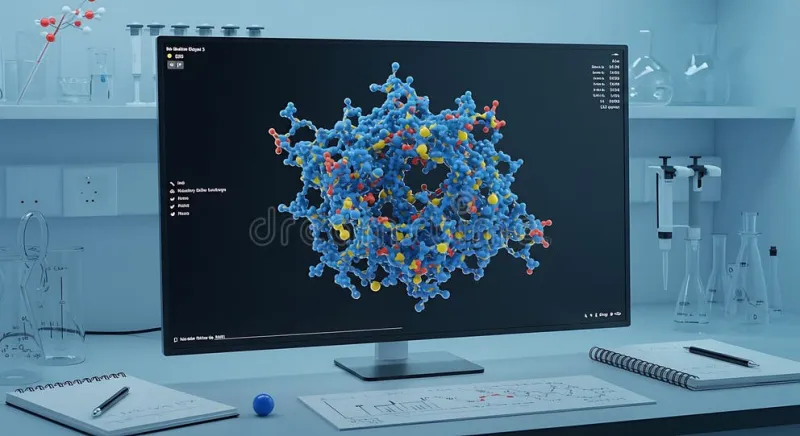
Photo: protein structure 3D molecular model computer visualization laboratory, via thumbs.dreamstime.com
In the summer of 2021, DeepMind's AlphaFold2 released predicted structures for nearly every protein in the human proteome, and the structural biology community experienced something between collective euphoria and existential vertigo. Decades of painstaking crystallography, cryo-electron microscopy, and NMR spectroscopy had yielded roughly 170,000 experimentally resolved protein structures. AlphaFold2 added hundreds of millions more in a matter of months.
The achievement was legitimate and historic. It was also, researchers are now quick to note, an extraordinarily well-solved version of a narrower problem than many first appreciated.
What AlphaFold Got Right — and What It Left Open
AlphaFold2 excels at predicting static, single-chain protein structures from amino acid sequences. For a large class of biological questions, that capability is transformative. Fragment-based drug discovery, target identification in rare metabolic disorders, and structural genomics programs that once required years of experimental effort can now be seeded computationally in days.
But proteins are not static objects. They flex, shift conformations, and adopt functionally distinct shapes depending on their cellular context, binding partners, and post-translational modifications. A protein implicated in a disease state may adopt a pathological conformation that its ground-state structure does not reveal. Drug binding itself induces conformational changes that static prediction cannot fully anticipate.
These limitations are not criticisms — they are coordinates on a map showing researchers where to go next.
The Competitors Entering the Field
The structural prediction landscape has grown considerably more crowded since AlphaFold2's debut. Meta AI's ESMFold, built on large language model architecture applied to protein sequences, offers substantially faster inference at a modest cost in accuracy — a trade-off that proves valuable for high-throughput screening applications. Baidu Research's PaddleHelix platform and the RoseTTAFold series from the Baker Lab at the University of Washington have each contributed distinct algorithmic approaches, with RoseTTAFold Diffusion extending prediction capabilities toward de novo protein design.
RoseTTAFold's diffusion-based framework represents a conceptual leap worth examining. Rather than predicting the structure of a naturally occurring protein, it can generate entirely novel protein architectures optimized for a defined function — a binding pocket, an enzymatic activity, or a therapeutic payload delivery mechanism. This is not prediction anymore. This is engineering.
Commercially, companies including Schrödinger, Relay Therapeutics, and Recursion Pharmaceuticals have integrated next-generation structure prediction into broader computational drug discovery pipelines, pairing structural models with molecular dynamics simulations, free energy perturbation calculations, and machine learning-guided lead optimization. The goal is to compress the preclinical timeline from years to months.
Rare Disease: Where Computational Biology Is Earning Its Clinical Credentials
Perhaps the most compelling early proof-of-concept for AI-driven structural medicine is emerging in rare and ultrarare disease programs, where patient populations are too small to sustain traditional high-throughput screening economics.
In lysosomal storage disorders, for example, structural prediction tools are enabling researchers to map the precise conformational consequences of individual missense mutations — the single amino acid substitutions that cause a functional enzyme to misfold and lose activity. Understanding exactly how a mutation destabilizes a protein's architecture opens the door to pharmacological chaperone development: small molecules designed to stabilize the mutant protein and restore partial function.
This approach is already demonstrating clinical relevance. Programs targeting rare variants of conditions such as Gaucher disease, Fabry disease, and certain forms of hereditary transthyretin amyloidosis are benefiting from structural insights that would have required years of experimental work to obtain as recently as five years ago. For patients with variants so rare that they have never been studied in clinical trials, a computational structural profile may be the only available guide to therapeutic strategy.
The Dynamics Problem: Biology's Remaining Stronghold
For all the momentum building in the field, researchers are careful not to overstate what current tools can deliver. The dynamics problem — modeling how proteins move, breathe, and transition between conformational states over biologically relevant timescales — remains largely unsolved by static prediction methods.
Molecular dynamics simulations can probe these movements, but at significant computational cost and with accuracy that degrades over longer timescales. Intrinsically disordered proteins, which lack stable three-dimensional structures and yet play critical roles in transcriptional regulation, cell signaling, and neurodegeneration, remain particularly resistant to conventional prediction frameworks.
The tau protein aggregates associated with Alzheimer's disease, the alpha-synuclein assemblies implicated in Parkinson's, and the FUS and TDP-43 inclusions seen in ALS are all rooted in the disordered and aggregation-prone behavior of proteins that no current static structure model fully captures. These are not peripheral cases — they represent some of the largest unmet needs in American medicine.
A cohort of emerging startups, including companies working on enhanced sampling algorithms and AI-accelerated molecular dynamics, is beginning to address this gap. Progress is real but incremental, and the scientific community is appropriately measured in its expectations.
From Prediction to Design: The Deeper Shift
The most significant long-term implication of the protein structure revolution may not be faster drug discovery in its conventional sense. It may be the gradual replacement of discovery-by-screening with design-by-intention.
If researchers can reliably predict how a protein behaves, they can begin to design molecules — whether small drugs, biologics, or gene therapy payloads — that interact with it in precisely specified ways. If they can design novel proteins from scratch, they can engineer entirely new therapeutic modalities that do not exist in nature.
This is the trajectory that laboratories from Boston to San Diego are now pursuing. The transition is neither complete nor guaranteed, but the direction is unmistakable. AlphaFold2 did not solve structural biology. It demonstrated, more convincingly than any prior experiment, that the problem of biology's molecular machinery is, in principle, computationally tractable.
That proof of principle has been enough to redirect enormous scientific and financial resources toward the next set of questions. The scramble to answer them is very much underway.