Ninety-Five Percent Effective, Until the Refrigerator: The Quiet Failure Point in American Vaccine Delivery
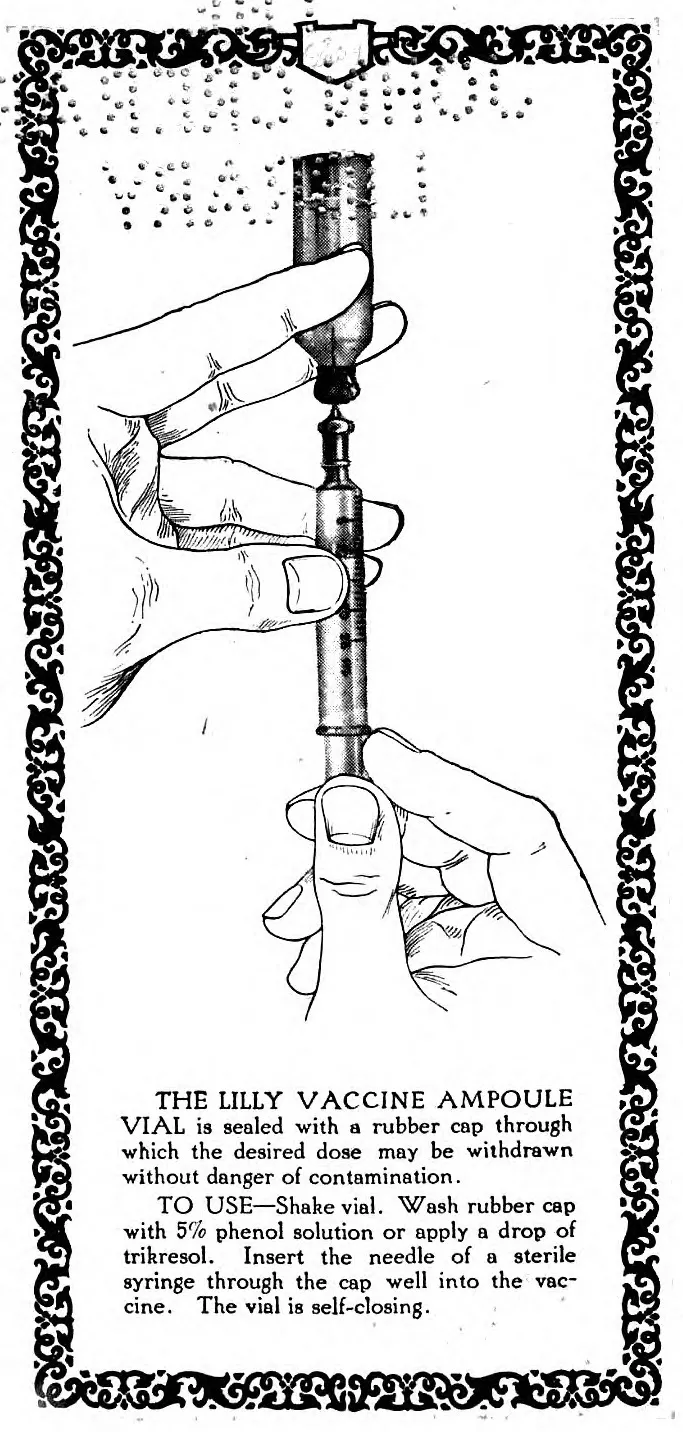
Photo: Lilly, Eli & Company, Indianapolis., Public domain, via Wikimedia Commons
At 6:15 on a Tuesday morning, a refrigerated truck pulls away from a distribution hub outside Indianapolis carrying 40,000 doses of influenza vaccine. Each vial inside represents the endpoint of an extraordinary scientific achievement: a formulation refined over decades, manufactured under sterile conditions, quality-tested against federal standards, and proven to reduce the risk of illness in the populations that receive it. By Friday, some of those doses will be injected into arms in a town of 3,000 people where the nearest hospital is an hour away.
What happens between Tuesday and Friday is the part of the vaccine story almost nobody tells — and it may matter more than most people realize.
The Invisible Specification
Most vaccines are not particularly forgiving cargo. Influenza vaccines generally need to be held between 2°C and 8°C from the moment of fill until the moment of administration. That's not a suggestion; it's a biochemical reality. The antigen proteins and adjuvant suspensions that make a vaccine work are exquisitely sensitive structures. Let a vial freeze, and those structures can be irreversibly disrupted. Let it sit in a hot loading dock, and degradation accelerates in ways that may not be visible, may not be obvious, and may not be caught.
The industry calls the infrastructure that prevents this the "cold chain," and it is one of the most underappreciated engineering systems in American healthcare. It spans manufacturer warehouses, air-freight holds, regional distribution centers, refrigerated trucks, pharmacy-grade refrigerators, and — critically — the small, often secondhand fridge behind the counter of a rural independent pharmacy.
A chain is only as strong as its weakest link. And in the United States, the weakest links are disproportionately found at the end of it.
Where the Chain Breaks
Our shipment from Indianapolis travels uneventfully for its first thousand miles. The manufacturer's warehouse maintains continuous temperature logging. The refrigerated truck has redundant sensors. The regional distribution center in the Midwest passes its quarterly audit.
The trouble begins, as it often does, at the destination.
Consider a typical small-town pharmacy — the kind that anchors Main Streets across Kansas, Iowa, and the Dakotas. Its vaccine refrigerator may be a decade old. It may have been purchased used. It may sit next to the oven in a break room, or near a window that gets afternoon sun. Staff may not know that the door shelf, where temperatures fluctuate most, is the worst possible place to store vaccines. They may not know that opening the door repeatedly on a busy clinic day creates micro-excursions that accumulate.
Studies of vaccine storage in outpatient settings have repeatedly found alarmingly high rates of improper storage conditions — some research has suggested that a substantial fraction of vaccine refrigerators in provider offices operate outside recommended ranges at any given time. The CDC has devoted entire toolkits to the problem, including guidance as granular as "do not store vaccines in a dormitory-style refrigerator."
The fact that such guidance exists tells you how common the mistake is.
The Excursion Nobody Sees
Here is the genuinely difficult part: temperature excursions are often invisible.
A vial of flu vaccine that has drifted to 12°C for six hours looks identical to one that hasn't. There's no discoloration, no precipitate, no warning label. The potency loss may be partial rather than total, which is scientifically worse in some ways — a partially degraded vaccine may still generate an immune response, just a weaker one, and no one will ever know which patients received it.
Data loggers have improved this picture considerably. Modern shipments often carry electronic sensors that record temperature continuously, and some vaccine programs now require them. But adoption is uneven, particularly among small independent providers who operate on margins thin enough that a $200 monitoring system is a real budget line item. Large health systems log everything. The pharmacy on the courthouse square may be logging nothing.
There's also a reporting problem. When a provider suspects an excursion, the correct response is to quarantine the stock and consult the manufacturer or public health authorities. But quarantining stock means canceling clinic appointments, refunding prepayments, and eating the cost. The incentive structure does not favor transparency.
The Rural Multiplier
These vulnerabilities compound geographically. Urban pharmacies receive frequent, small deliveries; a problem batch can be caught and replaced quickly. Rural providers often order in bulk to minimize shipping costs, which means more inventory sitting in local storage for longer — more doses, more time, more exposure to a single refrigerator's failure.
During flu season, when demand spikes and clinics run at capacity, the pressure on that aging refrigerator intensifies precisely when the stakes are highest.
The result is a quiet, statistically diffuse form of vaccine failure. Not an outbreak, not a scandal — just a slow erosion of the effectiveness that clinical trials promised. If a vaccine that is 60% effective in a controlled setting delivers 45% protection in a population whose doses spent too long at 11°C, no alarm will ever sound. The difference is simply absorbed into the noise of an ordinary flu season.
What Would Fix It
The solutions are neither mysterious nor prohibitively expensive. Continuous temperature monitoring with automated alerts, rather than twice-daily manual checks. Standardized, subsidized cold chain equipment for small providers — the same way public health programs supply syringes and sharps containers. Stability data that tells providers precisely how much excursion a given product tolerates, so that marginal deviations can be assessed honestly rather than triggering wasteful disposal or, worse, silent acceptance.
Some of this is happening. Vaccine manufacturers have been steadily improving thermostability, and newer formulations tolerate excursions that would have ruined older products. But the fundamental asymmetry remains: we invest enormously in the science inside the vial and comparatively little in the journey of the vial itself.
The 40,000 doses that left Indianapolis will mostly reach their destinations intact, because the system mostly works. But "mostly" is a strange standard for a technology we celebrate as one of medicine's greatest triumphs. A vaccine's effectiveness isn't determined only in the laboratory or the clinic.
Sometimes it's determined by a compressor, in a break room, in a town you've never heard of.