The Gap Between Blueprint and Batch: Synthetic Biology's Manufacturing Crisis
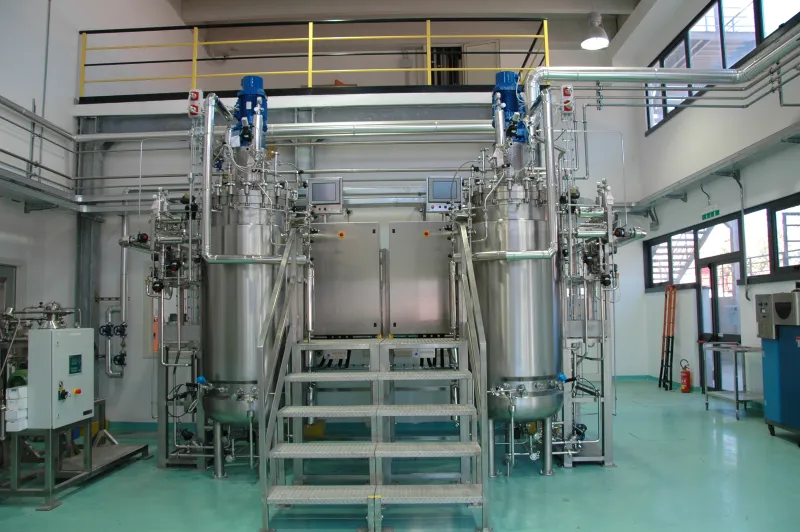
Photo: industrial fermentation bioreactor laboratory microorganism manufacturing, via lavallab.com
In synthetic biology, the hard part used to be the design. Constructing a genetic circuit capable of directing a microorganism to synthesize a novel compound—a pharmaceutical intermediate, a specialty chemical, a next-generation biofuel—once required years of painstaking, low-throughput laboratory work. Advances in DNA synthesis, computational pathway design, and high-throughput screening have compressed that timeline dramatically. What once took a decade can now take months.
The hard part, increasingly, is everything that comes after.
Across the synthetic biology sector, a pattern has emerged that is frustrating investors, delaying product launches, and quietly reshaping the competitive landscape. Companies arrive at the fermentation tank with a beautifully engineered organism and discover that the biological elegance of the design does not survive contact with the brutal physics of industrial scale. Yields collapse. Contamination rates climb. Organisms evolve away from their engineered function under the selective pressures of continuous production. Quality control frameworks built for conventional chemical manufacturing prove ill-suited to living systems that adapt, drift, and die.
The gap between blueprint and batch is wider than most outsiders appreciate—and closing it may prove as scientifically demanding as the molecular engineering that opened the field.
The Scale-Up Problem Is Not Simply a Size Problem
When synthetic biologists speak of scale-up challenges, the instinctive assumption is that they are describing a straightforward engineering exercise: build a bigger fermentation vessel, add more substrate, collect more product. In practice, the transition from a bench-scale bioreactor holding a few liters to a production-scale vessel holding tens of thousands of liters introduces nonlinearities that can render a finely tuned laboratory organism essentially nonfunctional.
Mixing dynamics change dramatically with vessel size. Gradients of dissolved oxygen, pH, and nutrient concentration—tightly controlled in a small reactor—become heterogeneous and difficult to manage at scale. Engineered organisms optimized to perform under uniform laboratory conditions frequently exhibit sharply reduced productivity when subjected to the fluctuating microenvironments of industrial fermentation. In some documented cases, yields observed at bench scale have declined by more than eighty percent upon transition to pilot-scale production—a loss that renders the economics of a product entirely unviable.
Heat dissipation presents additional complications. Microbial cultures generate substantial metabolic heat, and removing that heat efficiently from a large vessel without creating thermal gradients that stress the culture is a non-trivial engineering challenge. For organisms already operating under the metabolic burden of an engineered pathway—diverting cellular resources away from growth and toward production of a target compound—these additional stressors can prove catastrophic.
Evolutionary Drift: When Biology Fights Back
Perhaps the most underappreciated obstacle in synthetic biology manufacturing is the tendency of engineered organisms to evolve away from their designed function under production conditions.
Natural selection does not pause at the fermentation tank. In a large, continuously operated culture, any cell that acquires a mutation reducing the metabolic burden of the engineered pathway—even at the cost of reduced product yield—enjoys a competitive growth advantage. Over successive generations, these mutants can come to dominate the population, progressively eroding productivity. This phenomenon, sometimes called genetic instability or pathway escape, is particularly acute for pathways that impose significant metabolic costs on the host organism.
Addressing it requires either engineering organisms with reduced mutation rates, designing synthetic circuits that are less metabolically burdensome, or implementing production strategies—such as shorter fermentation runs with frequent culture refreshment—that limit the opportunity for evolutionary drift. Each of these approaches carries its own engineering and economic tradeoffs.
Some companies are exploring dynamic regulatory circuits that suppress pathway expression during growth phases and activate it only once a target cell density has been reached, reducing the window during which the culture is under selective pressure. Others are investigating the use of non-standard genetic codes or synthetic auxotrophy—engineering organisms to depend on synthetic nutrients not available in natural environments—as a means of limiting the competitive viability of escape mutants.
Quality Control in a Living System
Conventional pharmaceutical and chemical manufacturing operates on the assumption that a well-characterized process produces a consistent product. Living systems complicate that assumption fundamentally. Engineered microorganisms are not reagents; they are dynamic biological entities whose behavior is influenced by subtle variations in culture history, inoculation conditions, and environmental inputs that are difficult to fully standardize.
For synthetic biology companies pursuing regulated applications—pharmaceutical intermediates, cell therapies, or biologics produced via engineered hosts—this variability creates significant regulatory complexity. The FDA's process analytical technology framework, developed primarily for conventional drug manufacturing, must be adapted to accommodate the unique characteristics of living production systems. Demonstrating batch-to-batch consistency, establishing meaningful release specifications, and building analytical methods capable of detecting functionally relevant variations in microbial populations all require substantial investment.
Several US-based startups are developing specialized quality control platforms tailored to synthetic biology production. These include real-time genomic monitoring systems capable of detecting the emergence of escape mutants before they compromise a production run, metabolic flux analysis tools that provide continuous insight into the productive state of a culture, and machine learning models trained on historical fermentation data to predict and preempt yield-degrading events.
The Infrastructure Deficit
Beyond the biological and analytical challenges, synthetic biology faces a structural infrastructure problem. The specialized fermentation capacity required for scaled biological manufacturing—particularly for novel organisms requiring containment or operating under unusual conditions—is not widely available in the United States. The buildout of dedicated biomanufacturing infrastructure is expensive, time-consuming, and carries substantial financial risk for companies that cannot yet project reliable production economics.
This infrastructure gap is not unique to synthetic biology; it echoes challenges that have slowed the cell and gene therapy sector. But it is particularly acute for early-stage synthetic biology companies that may have compelling science and a credible market but lack the capital to construct production facilities while simultaneously advancing their core research programs.
Contract development and manufacturing organizations with synthetic biology expertise are beginning to emerge, and federal investment—including provisions within recent US industrial policy legislation aimed at domestic biomanufacturing capacity—has begun to direct resources toward this gap. Whether that investment will prove sufficient to support the sector's commercial ambitions remains an open question.
The Biology Was Never the Only Problem
Synthetic biology has always been, at its core, an engineering discipline—one that draws on molecular biology, computational design, and systems thinking to construct biological functionality from first principles. The field's most sophisticated practitioners have long understood that engineering a genetic circuit and engineering a manufacturing process are distinct challenges requiring distinct expertise.
What the current moment is forcing the broader sector to confront is that the second challenge is, in many respects, as demanding as the first—and that neglecting it during the early stages of a company's development can be fatal. The organisms are ready. The processes are not. Scrambling to close that gap may well define which synthetic biology platforms reach patients and markets—and which remain permanently elegant laboratory demonstrations.